
Golf practice at home doesn’t need to break the bank. Plenty of affordable drills can help beginners build a solid foundation, whether you have a big backyard or just some indoor space. I’ve found that having a few go-to exercises not only sharpens your skills but also keeps practice interesting and productive. This guide digs into the best ways to train your swing, stance, and short game right from home without fancy gear.
Why Home Golf Training Works for Beginners
Practicing golf at home is more popular than ever, mostly because it fits around busy schedules and doesn’t require a course membership. For beginners, home training reduces pressure and allows slow, focused progress. It also saves a ton on range fees—even more so if you’re just getting started and want to figure out the basics before investing in regular rounds or lessons.
A good chunk of golf’s improvement curve happens with repetition: getting comfortable swinging, putting, and chipping consistently. Practicing at home adds that extra volume of reps so important at the start. The private setting makes it easier to try out new moves without worrying about being watched, building confidence from the comfort of your own space. Over time, these steady sessions at home translate into much better performance on real courses.
Simple Setup: Getting Ready to Train at Home
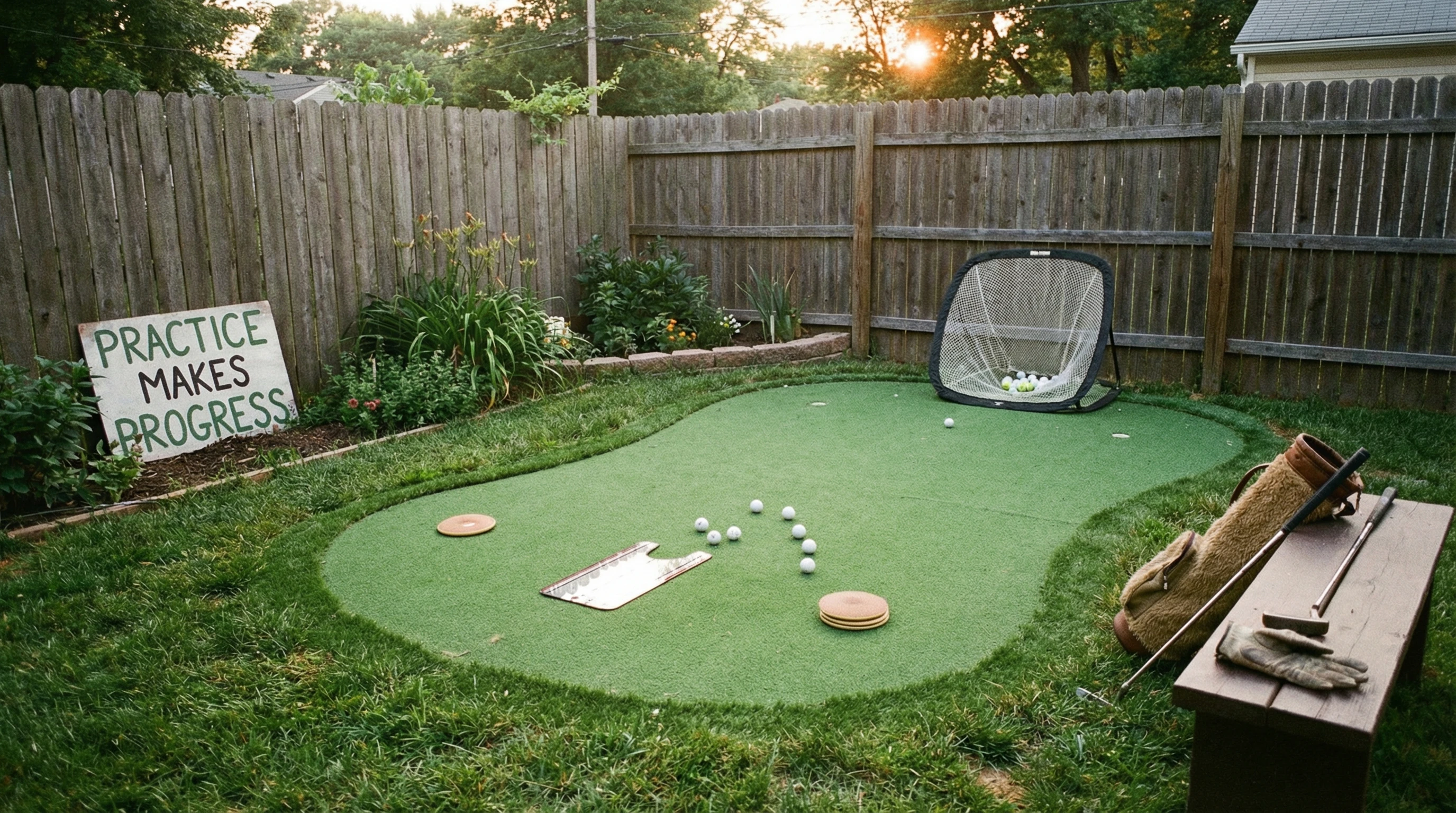
You don’t need a personal driving range to start, but a bit of prep goes a long way. Here’s what I usually keep handy for home golf drills:
- Mat or Carpet: A carpeted area or basic golf mat makes a fine spot to practice swings and putting.
- Net or Blanket: For full swings or chipping, I hang an old blanket or buy a cheap popup net to safely catch balls.
- Plastic Practice Balls: These are cheap and safe for indoors or small yards, making them great for working on swing mechanics.
- Alignment Sticks (or old clubs): Laying these down helps dial in your stance or aim and establish good setup habits.
If space is tight, even just a single putter and a smooth patch of floor can get you started. For those with a backyard, toss down a towel as a target or practice chipping into buckets. Remember, the goal is improvement, not perfection—so use what you have and keep things simple!
Essential Golf Drills for Beginners
Working on technique at home comes down to a handful of important skills: swing tempo, contact, aim, and touch around the green. Below are a few budget friendly drills I use all the time. These can be mixed and matched, keeping your routine fresh and helping you focus on all the right fundamentals.
1. Mirror Check: Building a Consistent Swing
Standing in front of a full length mirror, watch your setup and slowmotion swing. Focus on posture—feet shoulder width apart, knees slightly flexed, spine straight—and keep an eye on takeaway and follow through. Doing this repeatedly helps build muscle memory and spot any major issues with your fundamentals.
Why it matters: Seeing your form gives instant feedback, letting you make corrections and groove the basics. Plus, no balls or special gear required. Watching yourself swing helps boost confidence and makes it easier to understand what a good swing feels like.
2. Wall Drill for Swing Path
Stand facing a wall with your club a few inches away from it. Make slow practice swings, trying not to hit the wall in the backswing or follow through. This helps groove a proper, on plane swing path and keeps your arms and body working together as one unit.
Why it matters: If you’re new, this keeps your swing from looping outside or inside, and it can fix a lot of those nagging contact issues early on. It’s a no frills way to build a more repeatable swing motion.
3. Towel Chip Shot Drill
Lay a towel about three or four feet away on the carpet or grass. Using a wedge or short iron, practice landing balls on the towel with soft chips. If you don’t have space for full swings, plastic balls work well here too.
Why it matters: This builds chipping accuracy and touch, which saves tons of strokes on the course. Repeating chip shots onto a set target like this gets your hands used to delicate shots and makes you more automatic around the greens.
4. Gate Putting Drill
Set down two markers—coins, cups, or tees—slightly wider than your putter head. Roll putts through the “gate.” Practicing this keeps your stroke straight and builds a repeatable motion for short putts. For extra challenge, narrow the gate as your skills improve.
Why it matters: Home putting drills are one of the fastest ways for beginners to see lower scores on the green. Keeping a steady, straight stroke also helps boost your confidence in those must make short ones.
5. One Handed Swings
Take practice swings using just one arm (alternate which arm you use), focusing on smooth tempo and feeling the connection between arms and body. This helps both strength and coordination, especially if your two hands tend to fight each other on the club.
Why it matters: It encourages a more natural, athletic swing motion that transfers well to actual rounds. Practicing with one hand can also reveal small weaknesses in your grip or motion that are easy to fix early on.
Common Home Practice Mistakes (And How to Fix Them)
Everyone hits a few hiccups learning golf at home. There’s no shame in that. Here are a few issues I see a lot, with easy fixes and tips to keep practice on track:
- Swapping Distance for Accuracy: Smacking balls as hard as possible indoors rarely helps. It’s smarter to focus on short swings and perfecting contact and direction. Smooth, controlled movement leads to solid improvement.
- Mismatched Surfaces: Carpet or tile rolls very different from a real green. Try to practice on the firmest, smoothest surface possible and understand indoor results might not precisely match outdoor putting. Adjust your expectations and use outdoor sessions as a way to fine-tune your touch.
- Trying Too Much Too Soon: Tackle just one or two drills per session. Getting really solid at a couple techniques beats going through the motions of ten. Quality over quantity always wins—mastering basics sets up longterm growth.
- Not Making Adjustments: If you notice the same miss over and over, record a quick video or use a mirror to spot any obvious form flaws. Minor adjustments can lead to big breakthroughs, so experiment and observe often.
Budget Friendly Training Aids Worth Trying
If you’re okay with spending a little, some gear can really help at home. I’ve bought and tested quite a few, but a couple stand out as genuinely useful for beginners:
- Putting Mats: These range from $25 to $50 and usually have alignment lines or distance markers. They work indoors year round and help you refine your stroke. Consistent putting practice goes a long way towards sinking more putts on the course.
- Chipping Nets: Popup nets are under $40 online and fold down for easy storage. Throw in some foam or plastic balls for worry free indoor use. They’re a safe and simple way to keep chipping sharp, even when the weather is rough.
- Alignment Sticks: Cheap and versatile, perfect for visualizing aim, foot placement, and even swing plane.
Plenty of DIY options exist too. Use old clubs as alignment aids, towels for landing targets, or even painter’s tape as a putting path. Creativity can save you money and still provide great feedback for your practice sessions.
RealLife Examples: Seeing Results from at Home Drills
I’ve seen beginners go from missing every chip to leaving balls inside a few feet, just by hitting 30 towel chips a morning. With mirror checks, friends have quickly fixed hunching or sway in their swing. Even just 10 minutes of putting through a DIY gate before bed does wonders for confidence on the green, especially under pressure.
One tip: keep your sessions consistent, even if short. Five minutes daily trains your hands and eyes faster than a one hour binge once a week. Keeping a log or little notebook of your progress can also help motivate you, letting you spot gains as you go. Over time, your home practice will start showing up in better rounds and greater enjoyment on the course, all for low cost and low stress.
Frequently Asked Questions
Here are a few questions I get about home golf drills, along with practical answers to help you get the most out of your training sessions:
Q: Can I really improve my golf skills at home without a coach?
A: Absolutely. Plenty of progress happens just by repeating key moves and getting comfortable with the club. If you want feedback, recording yourself or joining online golf groups for tips can be super useful. Some golfers even make great strides solo, just by staying honest with their practice and checking themselves regularly.
Q: What’s the best piece of equipment to buy first for at home practice?
A: If your main focus is putting, a simple mat works great. For full swings, a net or even just foam balls let you practice safely. Neither needs to be expensive to do the job. The right tool depends on your space and main practice goals, so start simple and upgrade only if needed.
Q: How do I avoid building bad habits without a pro watching?
A: Stick with simple, focused drills and occasionally check your form in the mirror or film short clips. When in doubt, share with a golf buddy or online forum for feedback. Compare your swing to reliable online tutorials to catch mistakes before they become habits.
Getting the Most Out of Home Golf Practice
Affordable athome golf drills make learning the game more approachable. Repetition with the right drills boosts confidence and accuracy. Consistent routines pay off more than just occasional bursts of practice. I’ve found small tweaks and steady habits go a long way in building skills you’ll actually use out on the links. Start simple, keep it regular, and enjoy watching your game steadily improve—even from your own living room or backyard. As your skills grow, so will your love for the game—and that’s the best reason to keep swinging.