
If you’re looking to boost your golf game, working on your fitness can make a bigger impact than you might guess. You don’t need a gym membership or an entire golf course. Lots of super effective golf fitness drills can be done right at home. I’m going to break down the best at-home golf fitness drills, how they help your swing, and how to fit them into your routine. That way, you can feel ready to crush it on the course and even enjoy better movement in your daily life.
Why Golf Fitness Drills at Home Matter
Golf fitness has gotten way more attention in the last few years, and it’s obvious why. When you’re stronger, more flexible, and have better balance, you are way more likely to swing smooth, hit farther, and avoid those nagging tweaks or injuries. Most people think you need a fancy gym for this, but you can get pretty far just by using what you have at home.
Working on golf specific movements improves everything from power and control to endurance. Studies show that regular strength and mobility training can help golfers get better results, regardless of skill level. The best part is, consistent at-home training not only builds up your body for golf but can help you feel better day to day too.
Getting Started: Building a Home Friendly Routine
Getting into a good groove with golf fitness starts with a proper routine. Here’s how to set yourself up for success:
- Designate a Space: You don’t need much—just a spot where you can swing your arms and lay a mat down.
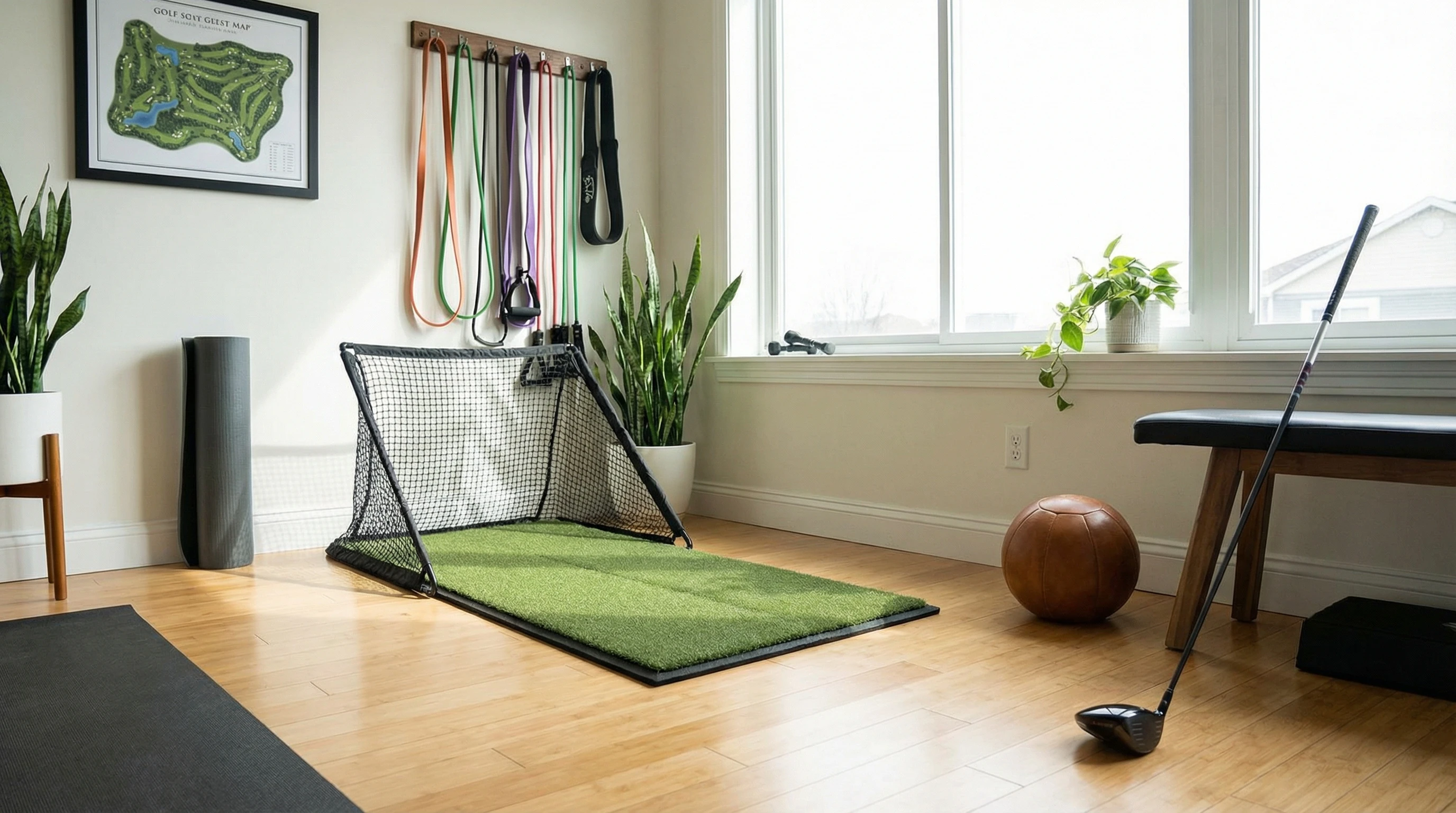
- Gather Your Gear: Most drills use bodyweight, but resistance bands, a medicine ball, and a light dumbbell can give you more options.
- Plan When You’ll Do It: Aim for at least 15-20 minutes, 3-4 times a week. Mornings are great but anytime works if you stick to it.
- Pace Yourself: Start with the basics and add more advanced moves when you feel ready. Consistency is the key.
Once you’ve picked a regular time and set out some comfortable gear, getting started becomes the easiest step. If you’d like, put on a favorite playlist to help pump up your energy for each session.
Core Golf Fitness Drills You Can Do at Home
Most of the time, golf fitness comes down to mobility, power, and balance. Here are some drills you can knock out at home to target all the right muscles for your swing:
- Pelvic Rotations: Stand tall, cross your arms on your chest, and rotate your hips side to side (like you’re starting your swing). This helps loosen up your lower back and hip rotation.
- Cat Cow Stretch: Down on all fours, alternate arching your back up and dipping it down. It keeps your upper and lower back limber, which is pretty important for a full range of motion.
- Wall Angels: Lean your back against a wall, bend elbows at 90 degrees, and slowly raise and lower your arms. This strengthens your upper back and improves posture for a clean swing path.
- Split Squats: With one foot behind you (on a step or chair), drop your back knee toward the floor and push up through your front heel. This drill targets your glutes and legs for stability in your golf stance.
- Plank with Torso Rotation: Get into a forearm plank, then slowly rotate your upper body, lifting one arm toward the ceiling, then switch. This movement ramps up your core and gets you rotating with control.
- Banded Rotational Pulls: Anchor a resistance band, hold with both hands, arms straight, and rotate your torso away, keeping your hips steady. This mimics the move you need for generating speed in your swing.
In addition to these, you can also try hip flexor stretches or simple side lunges. Both do a great job of opening up tight muscles and helping your swing stay smooth and powerful.
Quick Guide for Fitting Golf Fitness into Your Day
Adding these drills into your normal week is easier than you might think. Here’s one way to get started:
- Start with a Warm Up: March in place, do a few arm circles, or try some jumping jacks for a couple of minutes.
- Pick Three to Four Drills: Cycle through them for 10-12 reps each (or hold for 30 seconds if it’s a stretch or plank).
- Rest, Then Repeat: Do two or three rounds, resting briefly as needed.
- Finish with Gentle Stretching: Loosen up your hips, back, and shoulders to wind down and help recovery.
Sneaking these moves into your schedule a few times each week makes a real difference in how you feel and play. Mixing up the drills keeps things fresh and keeps you moving forward.
If you find yourself short on time, even doing a five minute routine of your favorite drills can help. Consistency, rather than intensity or length, delivers the best results for most golfers.
Common Hurdles and How to Deal with Them
Working out at home sometimes leads to a few common roadblocks. Here’s what usually pops up, and a few easy ways to handle it:
- Not Enough Space: Clear out a corner or push a coffee table aside. You usually don’t need more than a yoga mat sized area to get results.
- Staying Motivated: Track your progress, keep a checklist, or invite a friend to join via video call. Seeing and feeling results, like looser backs or a boost in club speed, helps keep you on track.
- No Equipment: Most drills can be done with just your bodyweight. Simple gear like resistance bands are affordable and take up hardly any room.
- Forgetting Drills: Write down the moves or bookmark a video to remind yourself. Keeping things simple is best so you can build good habits.
To help keep yourself accountable, put your workout sessions on your calendar or ask someone to check in with you each week. If you prefer variety, occasionally try new drills to keep things interesting and challenge new muscle groups.
Why Mobility is Really Important for Golf
If you’ve ever felt stiff during a swing or noticed your distances getting shorter, mobility might be the missing link. Golf puts your joints and muscles through a big range of motion. Hips, back, shoulders all have to move well together. Spending just a few minutes on mobility exercises like hip flexor stretches or ‘open books’ for the upper back will help smooth out your golf mechanics and keep you feeling looser throughout the round.
Try working in shoulder circles and gentle twists before you play, so you get a sense of what your body’s ready for that day. Over time, you’ll spot better turn and improved swing comfort as your flexibility rises.
Building Stability and Balance for a Stronger Swing
Stability drills help you hold your ground, especially when you swing fast. Simple moves like single leg stands or balance reaches challenge the muscles in your feet and legs, which makes you more steady over the ball. Try standing on one leg while doing tiny arm swings, or use a throw pillow as a soft surface for an added challenge. The stronger your balance, the less likely you’ll over swing or lose your footing on uneven lies.
Adding in side step squats or gentle hops on the spot are two more ways to work your balance and stability at home. Better stability gives you an edge on windy days or if you’re hitting off tricky lies.
Level Up: More Ways to Train for Golf at Home
If you’ve been doing the basics for a while and want to get even more out of your workout, try adding these ideas into your routine:
Medicine Ball Rotational Slams: Use a medicine ball and slam it side to side against the wall or ground (make sure you won’t break anything!). This boosts explosive power through your core and hips, just like a big drive.
Speed Swings: Grab an old club or a weighted stick, then swing back and forth at a quick but controlled pace, focusing on form. This trains your body for faster club speeds without adding stress to your swing.
Tubing or Resistance Band Swings: These mimic the golf swing and help build up muscles used in your swing path. Anchor a resistance band low and practice your takeaway and follow through for 10-15 reps.
These advanced moves aren’t about swinging harder but about teaching your body to move efficiently with stability and speed. Sprinkle them in a few times a week as you get stronger or after a few weeks of regular basic training. You can also try combining balance and strength by doing split squats while holding a light weight, or alternate between core work and mobility drills for a well rounded routine.
What At Home Fitness Means for Your Game
Training off the course directly helps your game. For example, better core strength translates to more control over your swing, and flexible hips and shoulders mean a fuller turn and more distance. Doing these drills regularly can help you feel less sore after a round, and you’ll be less likely to deal with strains or aches.
- Flexibility: More range of motion lets you create smoother, powerful swings.
- Strength: Added leg and core strength can mean faster clubhead speed and longer shots.
- Balance: Improved balance means steadier contact, especially in tricky lies or during pressure shots.
So, whether you’re a weekend golfer or getting ready for your next big tournament, at home golf fitness can help you play your best and enjoy the course more. Plus, regular movement and exercise can make your everyday life easier—whether lifting groceries, gardening, or just getting up and down stairs with more pep.
Frequently Asked Questions
Here are a few things that pop up a lot when people start doing golf fitness drills at home:
Question: How many times a week should I do golf fitness drills?
Answer: Three to four times a week is a good place to start. It’s better to be consistent than to go all out once in a while.
Question: What if I don’t have any equipment?
Answer: No worries! Most of these drills can be done with bodyweight or basic household items (a towel, a sturdy chair, even a pillow). Add resistance bands later if you want more challenge.
Question: Will these drills actually help my golf swing?
Answer: Absolutely. Improved strength, flexibility, and balance always help golfers make more powerful, efficient, and repeatable swings.
Question: Should I do these drills before or after my round?
Answer: Gentle mobility stretches can be great before your round to loosen up. Save more intense strength or power drills for after your golf or on off days so you’re always fresh for your best shots.
Ready to Get Moving?
Starting a golf fitness program at home doesn’t need to be complicated. Use these drills to build a simple routine, stick with it, and you’ll start to see your swing getting easier and more powerful. The best time to begin is now. Your next round could be your best yet!