
Getting a golf swing onto the right path might look simple, but anyone who’s spent time at the range knows how quickly things can get out of sync. Golf training aids focused on swing plane and alignment are a solid way to get your fundamentals dialed in, whether you’re totally new to golf or just trying to hit straighter, more consistent shots. In this guide, I’ll walk through how these tools can help, what’s out there, and some of the most practical tips for making them work for you.
Why Swing Plane and Alignment Matter in Golf
The swing plane is basically the invisible path your clubhead follows as you swing. If your swing is too flat or upright, or if the club gets off track halfway through, your shots will head everywhere but where you want them. Alignment isn’t just about where your feet point. It’s about setting your entire body and clubface towards the target so you have a better shot at sending the ball where you intended.
Amateur golfers often struggle with these two concepts the most. Even a little bit of misalignment or a swing that comes too much over the top (or too far from the inside) can leave you fighting hooks, slices, and every miss in between. Training aids exist mainly to give you instant feedback or a physical guide so you know when things are right, or not so right. Many top coaches use these simple tools during lessons to turn a technical explanation into something you can feel.
Types of Golf Training Aids: What’s Out There?
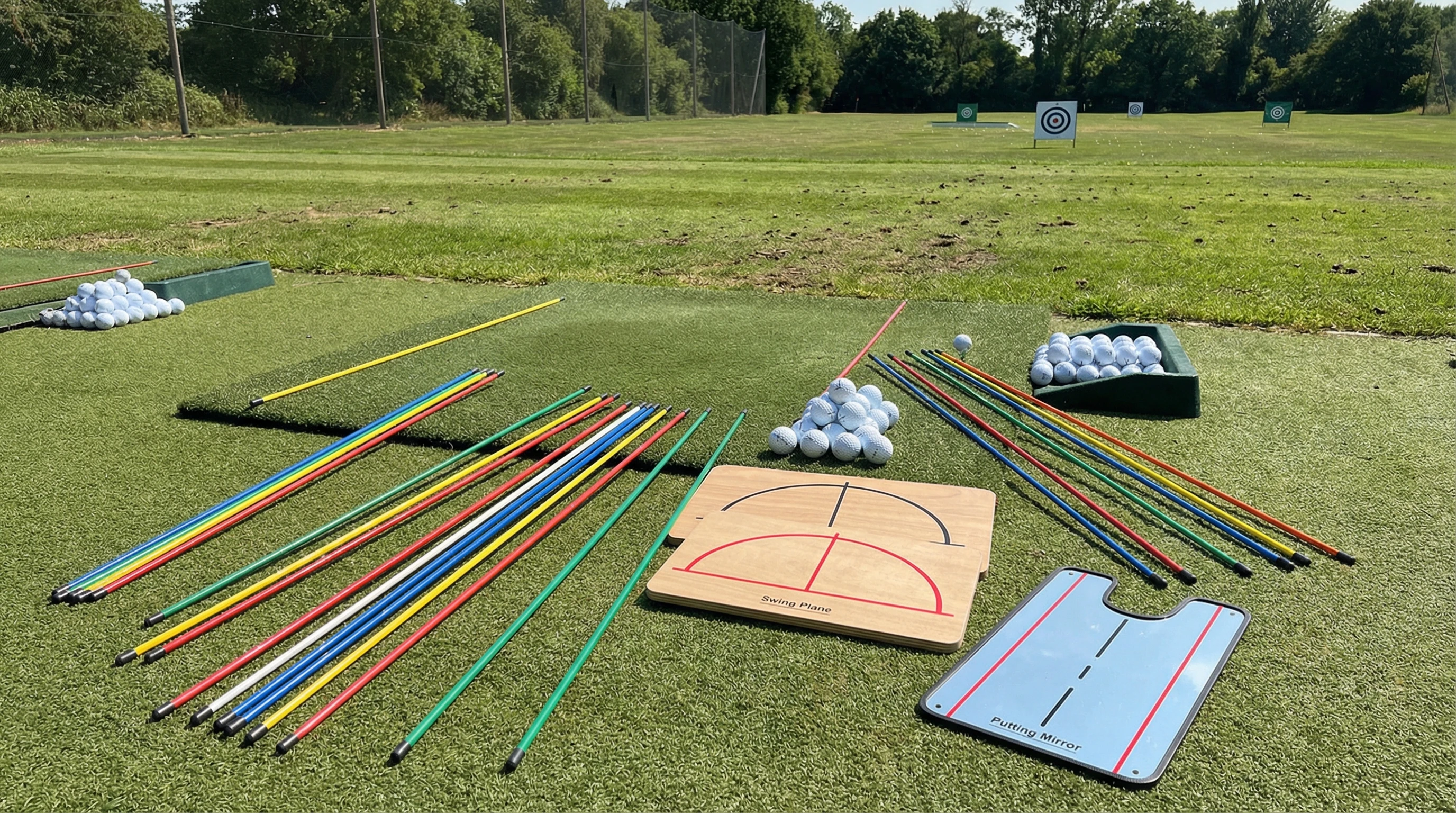
Training aids come in all shapes and sizes, but the best ones for swing plane and alignment usually fall into a few main categories:
- Alignment Sticks: Super affordable and multiuse, these sticks go on the ground or even stick out of your bag to show your stance and help direct your swing path.
- Plane Guides and Hoops: These provide a visible or physical path for your club to follow, making it easier to train your body into repeating the right move.
- Laser Devices: Great for indoor work, these show where your club or body is aimed and can highlight any setup or takeaway problems fast.
- Mirror Tools: Standing in front of a fullsize mirror or a small setup mirror gives instant visual feedback for both your swing path and fullbody alignment.
- Weighted Clubs and Swing Trainers: Some feature special angles or markings to reinforce the proper motion with extra resistance or a unique feel.
Picking the right tool depends on how you practice, where you play (indoor or outdoor), and your personal learning style. Some golfers need to see it. Others need to feel it. Luckily, there are options for both.
Getting Started With Swing Plane and Alignment Aids
Jumping in with a training aid is usually pretty straightforward, but I’ve found a few practical steps help you make the most of these tools:
- Start With a Baseline: Take a few full swings without any aid and note where your shots go. Are you consistently missing right or left? That will give you a clue about whether alignment or swing path is the bigger issue.
- Set Up Your Aid Carefully: Read the instructions, and if possible, use alignment aids on a flat surface. Even small adjustments can really throw things off if your reference is crooked.
- Work Slowly: Take halfspeed swings until your move feels smooth and natural. The feedback means nothing if you race through the drill and let old habits take over.
- Check With Video: If you have a phone, get some side and downtheline footage to compare your form with the feedback the aid is giving.
I’ve seen a lot of folks give up on these tools after one session, but sticking with it for even 10 minutes a session, a couple times a week, can make a noticeable difference over a month or two.
Common Problems These Aids Can Fix
Golfers at all levels struggle with a handful of swing plane and alignment problems. Here’s how the right training aid can address them:
- Coming Over the Top: Using a plane stick or a vertical alignment rod helps train an intoout path so you stop cutting across the ball.
- Getting Too Flat or Upright: Standing behind a plane board, foam noodle, or even a stick angled along the correct swing path can nudge your motion back on track.
- Poor Shoulder Alignment: Alignment rods not only line up your feet, but also help set hips and shoulders parallel to your intended target, something most basic stance setups miss.
- Unclear Aiming: Mirrors and laser tools show exactly where your clubface and body are pointing at address, so you can match your setup to your intended shot shape and target.
Once you spot which issue pops up in your game, it’s way easier to choose a tool or drill that locks in the fix.
Alignment Stick Tips
Alignment sticks are worth picking up for every golfer. Here are a few simple alignment stick drills I use:
- Lay two sticks down, one along your toe line and one pointed toward your target, just outside the ball. Get your stance parallel to both rods.
- Place a stick a few feet behind you, angled to match your ideal swing plane. Use it as a guide to keep your backswing and downswing from getting too steep or flat.
Using a Golf Swing Plane Board
A swing plane board or hoop is pretty handy for folks struggling with big hooks or slices. Taking slowmotion swings along the board trains your body to feel the correct path, especially for people who can’t picture plane angles. If you don’t have a commercial board, a foam swimming noodle stuck into the ground at an angle also works great.
Practical Challenges and How To Adjust
It’s easy to overdo it with training aids, but finding the right balance is important. Here’s what to watch out for:
- Overreliance: These tools are there to guide, not to replace, regular swings. Mixing up practice with and without the aid helps make improvements stick when you’re on the course.
- Setup Consistency: Where you place your aid matters. Practicing on uneven ground can build bad habits if your clubface or alignment isn’t square to your real target line.
- Feedback Fatigue: Go for short sessions. Ten to fifteen focused swings mean more than a marathon session where you end up tired and revert back to old patterns anyway.
Getting input from a teaching pro or even a friend can also help make your practice more focused and productive. Sometimes what feels right is actually an ingrained, stubborn bad habit, so having someone check your form is useful.
Eye-Catching Features To Look For In Modern Training Aids
The latest training aids often bring extra features to the table, making them worth checking out:
- Portability: Compact designs that fit in your golf bag are handy if you practice at a public range or during lunch breaks.
- Multifunctional: Aids that double as both swing and putting trainers give you more value for your money.
- Visual Markers: Some aids come with colorcoded zones so you get quick confirmation when you’re in the right spot.
- Adjustable Angles: Being able to tweak the angle makes the aid work for different clubs (irons, hybrids, woods), so you don’t get locked into one type of swing.
Features like these help keep practice quick and flexible, especially if you tend to lose focus during repetitive drills. If you enjoy gadgets, you’ll appreciate how technology keeps making practice smarter and more fun. You might even stumble upon an aid with Bluetooth capabilities or built-in feedback sounds, which can step up your practice routine in a fresh way.
FAQs About Golf Swing Plane and Alignment Aids
Here are a few things golfers often want to know about using these tools:
Do swing plane training aids work for beginners?
Absolutely. They give instant, physical feedback, which is easier to use than just listening to a tip or watching a video.
How often should I use alignment sticks or swing plane tools?
Even hitting a dozen balls per session with your chosen aid can start building muscle memory and better habits quickly.
Can I use these aids indoors?
Many are ideal for backyard or garage practice, especially with foam or practice balls. Just be careful with full swings inside!
Bringing Your Best Swing to the Course
Training aids for swing plane and alignment really make a difference when used the right way. They help you build a repeatable, reliable swing and make practice feel less like guesswork. With a patient approach and a few basic tools, you’ll likely notice your ballstriking, direction, and confidence improving each week you put in the work.
Checking out a few different aids and drills helps you find what clicks for you and makes practice both more effective and a bit more fun. Swing changes can be tough; when you start seeing more shots finding your target, you’ll know it’s worth the effort. Wrapping up, setting aside focused time with these aids can take your golf game up a notch, helping to turn driving range sessions into better rounds where you see lasting results.