
If you’re looking to sharpen your golf swing from the comfort of home, you’re in luck. There are tons of golf training drills perfect for a home routine. No driving range required! Whether you have a full net set up or just a small area to move, working on your swing indoors can boost your consistency, flexibility, and confidence when you hit the links.
Why Work on Your Golf Swing at Home?
Golf isn’t just about having explosive power or high-end clubs. A dependable swing is all about repetition, balance, and muscle memory. Many pros mix regular range sessions with targeted home practice, especially during the off-season or when the weather isn’t cooperating. Practice at home lets you zoom in on proper form, free from distractions about where your ball ends up.
In fact, a lot of the drills coaches recommend for the range translate just as well indoors. Sometimes, they’re even better because you aren’t fixating on ball flight and can really focus on technique. Plus, it’s a massive time-saver. Just ten minutes a day at home can add up to steady improvement between rounds.
Setting Up Your Home Golf Practice Zone
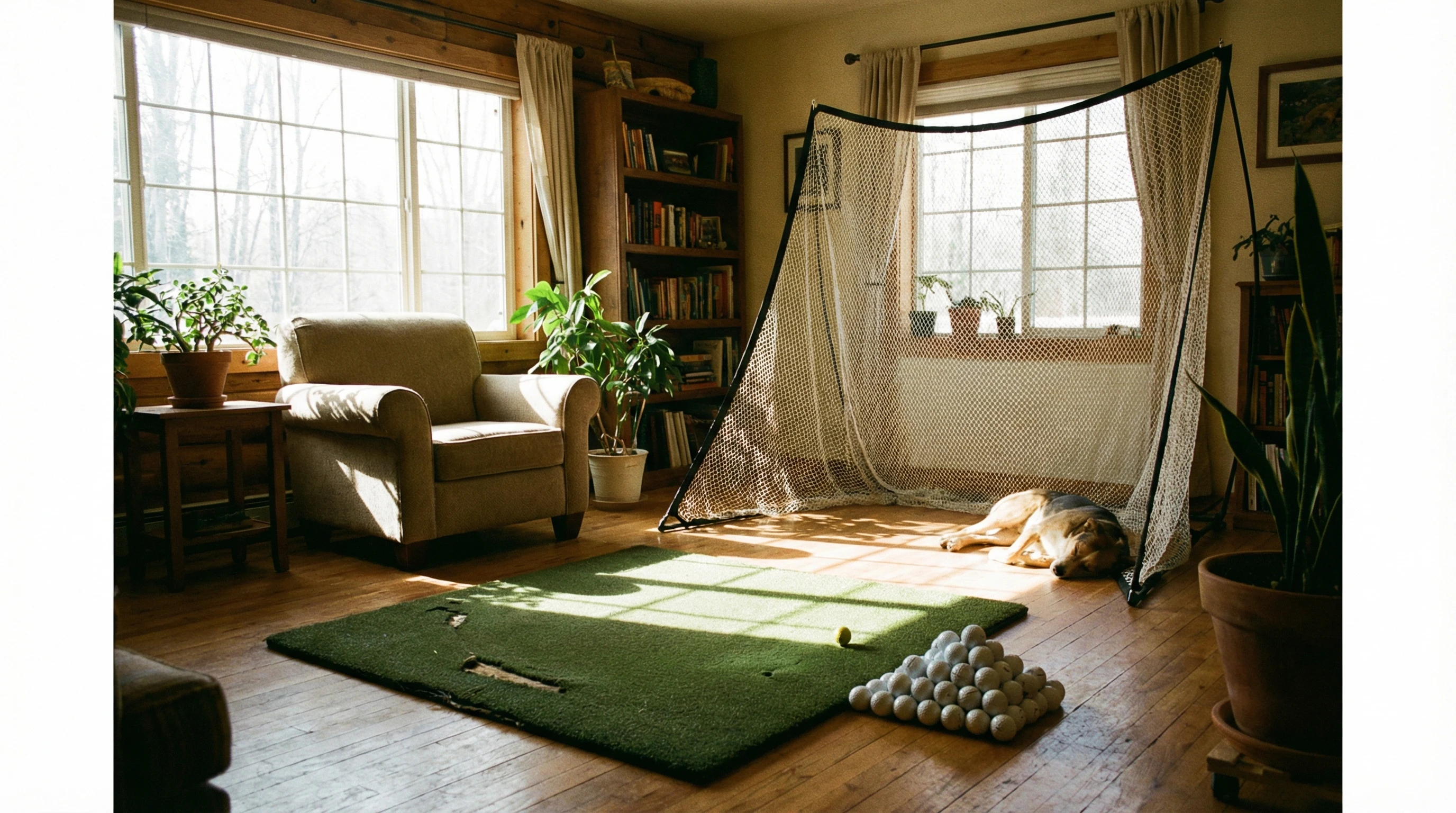
You don’t need a sprawling basement or fancy gear to get started. All you really need is a club, a soft ball, and a bit of open space. If you have more room, maybe for a training net, mat, or putting aid, fantastic – but most drills work fine with just the basics.
- Golf Mat: Saves your floors and lets you mimic different types of turf.
- Training Net: Allows for full swings without worrying about damage.
- Mirror: Lets you check your stance and swing path visually.
- Alignment Sticks: Any broomstick or regular stick can help you set up consistently every time.
- Foam or Plastic Balls: Much safer than real golf balls for indoor practice.
Top 10 Golf Training Drills You Can Do At Home
- SlowMotion Swings
Stand in front of a mirror and make exaggerated, slow swings. Focus on your backswing, top position, and follow through. This drill grooves muscle memory and makes it easier to spot problems in your stance or movement. It’s a great way to lock in consistency. - OneHanded Swings
Try swinging with just your lead hand, then your back hand. Do several swings with each. This exercise builds strength and awareness of how each arm works in the swing. Most folks feel more coordinated and fluid after practicing this drill a few times. - Wall Drill
Stand so your back shoulder barely touches a wall. As you swing back, make sure your club doesn’t hit the wall. This keeps your club “on plane” and helps you avoid swinging too far inside or outside. It’s simple, but super helpful if you tend to get steep or come over the top. - Pause and Go Drill
Bring your club to the top of your backswing, pause for a moment, then complete the swing. Pausing helps you feel the proper weight shift and keeps you from rushing. This is a common pitfall for a lot of golfers, and this move helps break that habit. - Alignment Stick (or Broom) Drill
Lay a broomstick or rod along your foot line and another along the target line. Practice setting up as if you’re about to hit a real shot, keeping hips, knees, and shoulders parallel. Repeating this helps alignment become second nature – one of the most important fundamentals. - StepThrough Drill
Start in a normal stance, swing back, and as you swing down, step your back foot toward the target. This move helps your whole body move in sync and prevents lazy downswings. It also gets you feeling more athletic—just be mindful of your balance in smaller spaces. - Book Under Arm Drill
Wedge a paperback book or headcover under your back armpit, then make half swings. The goal is to keep your arm close to your body for a unified motion. If the book drops during your swing, it means your arms are getting too independent of your torso. - Putting Spoon Drill
If you don’t have a putter handy, use a soup spoon! Roll balls across the carpet and aim for consistent, controlled contact. Try rolling into a cup or toward a defined target. Increasing distances can really help sharpen your touch and feel for speed control. - Pillow Balance Drill
Stand on a firm pillow or couch cushion while making slow swings. This throws off your balance, forcing your core and legs to stabilize. You’ll find your balance getting better and your swing feeling more athletic after several sessions. - Shadow Swing Drill
Pick a spot with good lighting so you can see your shadow on the wall or floor. Watch your swing shape, shoulder turn, and head position. It’s a surprisingly effective way to check your form and catch issues—plus, you can do it almost anywhere.
Pointers for Better Results with At Home Drills
The secret to good home practice is consistency and keeping yourself honest about your form. Filming yourself with a phone, even briefly, makes it much easier to catch moves you wouldn’t notice otherwise. Mixing in different drills keeps things fresh and addresses areas you might otherwise neglect.
- Routine Over Quantity: A few minutes of practice most days trumps a long session once a week. Regularity leads to lasting gains.
- Check Your Grip: Always doublecheck your grip during practice. Even seasoned golfers do this all the time.
- Track Progress: Make quick notes after each session about what felt smooth or what didn’t. Over time, you’ll pick up on patterns and know what’s actually helping you get better.
Common Mistakes to Watch Out For
- Forcing Full Power Indoors: Going full blast inside isn’t wise. Save the speed for the course—at home, focus on smooth, controlled swings.
- Skipping the Setup: It’s tempting to slack off on your stance at home, but you should always go through your full setup routine, even when hitting foam balls in socks.
- Ignoring Feedback: If something feels off or overly tough, slow down and use a mirror or video to break down what’s happening. Sometimes, what feels right isn’t actually correct.
How to Build a Realistic Home Practice Schedule
Sticking to regular, bite-sized practice is more effective than cramming all ten drills into one session. Choose a few drills to focus on each week and swap them out as you notice progress or get bored. It works just as well to grab ten minutes here and there during the day as it does to block off longer evening sessions. Combining putting, balance, and swing drills helps keep practice interesting and well-rounded.
- Start Simple: Pick just one or two drills to start your first week.
- Add Variety: Mix in a couple new drills when you’re comfortable with those basics, or want more challenge.
- Keep It Fun: Turn your practice into a mini-challenge. Try chipping into a basket or see if you can roll a ball across the rug without touching the sides.
Real-Life Success with At Home Golf Training
Some of the best improvements I’ve had have come from swinging a club in the hallway or working balance drills during TV breaks. Friends tell me the same drills that look simple when you’re staring at your living room wall can totally reshape your swing out on the fairway. It’s never about chasing perfection. The real win is staying motivated and putting in a little practice as often as you can.
At Home Golf Practice FAQs
Can I really improve my golf swing practicing at home?
Definitely! Tons of great players keep up at-home practice alongside their range sessions. The main thing is to focus on sound technique, body balance, and building up your swing with repetitions. These drills lay a better foundation so you play more consistently when you head out to the course.
How much space do I need for these drills?
Not much at all. Most drills can be done in a small living room or hallway. If space is limited, opt for foam or plastic practice balls to keep things safe.
How often should I run through these drills?
Even a few minutes a few times a week makes a noticeable difference. If you can fit in three or four mini-sessions weekly, you’ll start seeing a more reliable swing and better confidence faster than you might expect.
Getting the Most Out of Your At Home Training
Building a reliable, smoother swing is totally within your reach right at home. It’s all about technique, stable balance, and steady setup practice until the moves feel like second nature. At-home golf practice is about working smarter, not necessarily longer or harder. Every bit of discipline now will reward you the next time you hit the first tee.
Set up your small practice space, grab your favorite club, and tackle a drill or two. Give these ideas a try, and you might find that home practice quickly becomes as enjoyable as your best rounds on the course!