
Improving your golf swing sometimes feels like a mystery, but the right training aids can make a big difference. There are tons of gadgets and tools out there that promise to fix your slice, boost your tempo, or help you hit it straighter. I’ve tried a bunch myself and talked to golfers at all skill levels, so I pulled together a list of training aids worth checking out if you want to see real changes in your swing.
Why Use Golf Swing Training Aids?
Training aids aren’t just for beginners. Pros use swing trainers, alignment tools, and feedback devices to spot what’s going wrong, and to groove good habits. A good aid gives you immediate feedback, which helps you know if you’re actually making the changes you want. If you struggle with consistency or just want to practice smarter, there’s probably a training gadget that fits your routine.
Golf has a reputation for being tough to master, but that’s what makes it so fun. With new swing aids coming out every season, the market has grown into a huge industry. Today’s tools blend simple concepts with high-tech solutions, making it easier for anyone to work on specific issues, from tempo to wrist action. Learning with these tools can help develop muscle memory faster, and that is super important when you only get a few hours a week to practice. Plus, working with modern aids can make practicing at home or at the range a lot more interesting and productive, giving even amateurs some of the feedback and hands-on learning that the pros get all the time. You might even stumble upon a new favorite drill or game that keeps things fresh during repetitive practice sessions.
How to Choose the Best Swing Training Aid for You
With so many options, picking training aids can feel overwhelming. I’ve noticed the best ones are simple, practical, and fix a specific problem. Here are some things that help when sorting through your choices:
- Identify Your Weak Spots: Figure out if you struggle with alignment, tempo, grip, or swing plane. This helps narrow down the field.
- Look for Instant Feedback: The most useful aids tell you right away if you’re doing something correct or not.
- Consider Portability: Some tools fit right in your bag and are easy to use at the range or in the backyard.
- Budget: Price points vary from $10 gadgets to pricier electronic devices. Decide what you’re comfortable spending, and start small if you’re not sure.
- Read Real Reviews: I always check user feedback online, especially for durability and how easy it is to get results.
If you’re on the fence, asking your golf pro or a trusted friend for quick advice can save you time and money. There’s no shame in starting with the basics, and in most cases, even seasoned golfers go back to simple aids when working on fundamentals.
Top Golf Swing Training Aids That Really Work
There are plenty of swing aids on the market. These are a few I think can actually help, either from personal experience or from talking with everyday golfers.
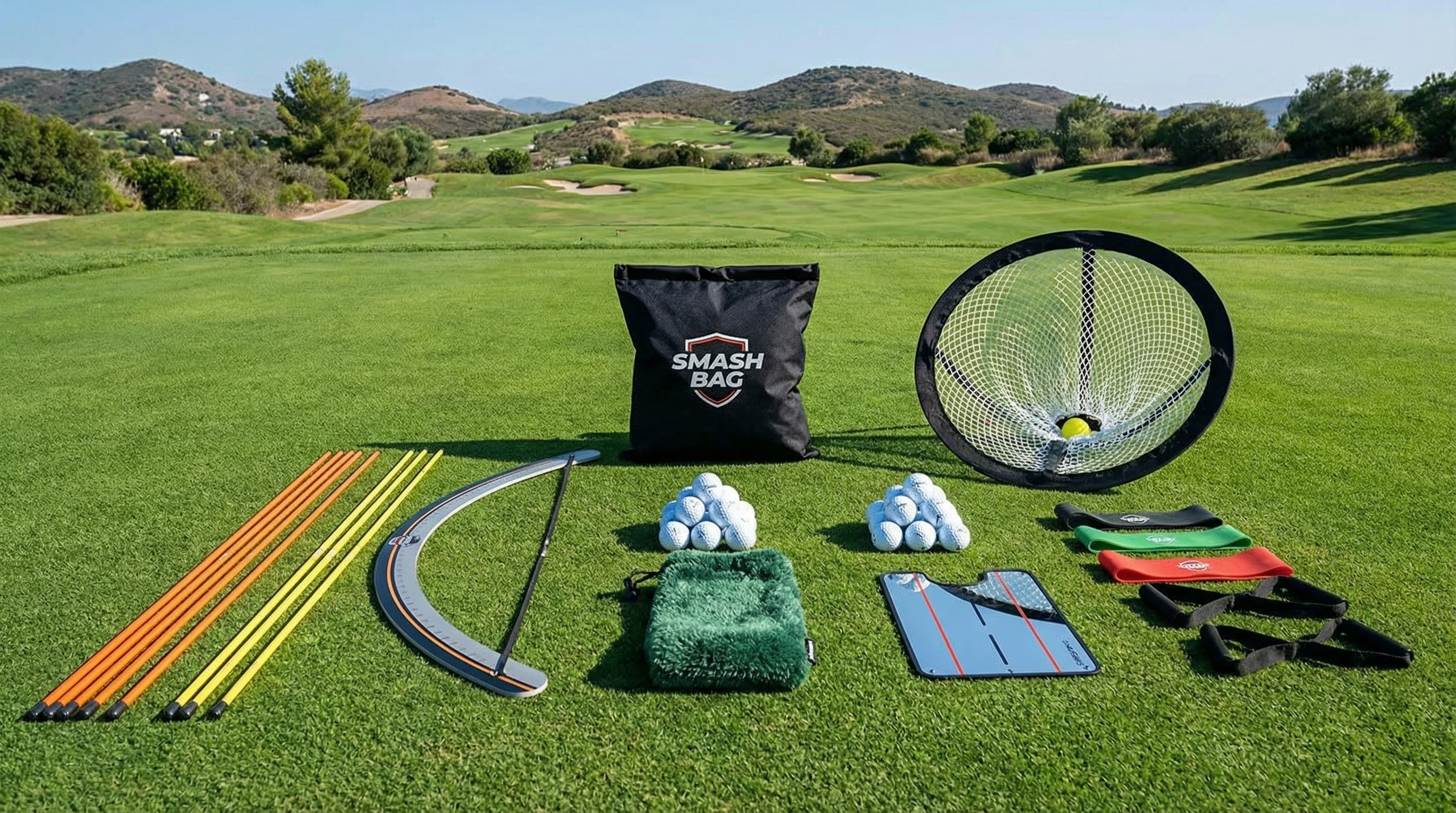
- Alignment Sticks: Super simple and super popular. Lay them on the ground to help with feet and shoulder alignment. These help reinforce proper setup and swing path. Many coaches will have you use these to check your lines before every session, which is something you can easily do by yourself before warming up.
- Impact Bag: Useful for feeling what solid contact actually is. You hit the bag instead of a ball, so it’s safe to use indoors or outdoors. I used one early on to help with releasing the club at the right moment and squaring the face.
- Weighted Clubs: These help build strength and train you to swing in the right motion. I like using a weighted club during warmups or slow swings to build tempo and get the muscles moving.
- Grip Trainers: These handy gadgets clip onto your club and guide your hands into the right position. Great for anyone learning the fundamentals or breaking a bad habit.
- Tempo Trainers: These tools either beep or vibrate to help you find a smooth rhythm. Timing is everything in a golf swing, so I recommend using a tempo aid if you’re inconsistent.
- Mirror or Video Feedback Tools: These let you see what your swing actually looks like. Using a portable mirror at the range or a phone mount works wonders for spotting flaws you can’t feel. Even reviewing brief video clips can help you spot patterns and get a sense of what still needs work, making your solo practice a lot more focused.
Getting Started Using Swing Aids
Once you’ve picked something, getting started is pretty simple. Here’s what’s worked for me and for folks I know:
- Read the Instructions: Even though many gadgets are straightforward, checking the directions can save you time and confusion.
- Start Slow: Don’t rush through the drills. Practice at half speed to build muscle memory before you go full throttle.
- Mix into Regular Practice: Use the aid for a handful of reps, then hit balls without it to transfer what you’ve learned.
- Be Consistent: The more often you use the aid, the faster you’ll see results. Even 5-10 minutes a day adds up over time.
Building new habits with aids is about patience, not magic. I noticed real changes after a couple of weeks when I kept the drills simple and didn’t overdo it. Another thing that helps is jotting down what works in a notebook or tracking practice in a notes app, which makes it easier to remember minor breakthroughs next time you’re at the range.
Common Issues Golfers Face Using Swing Aids
Even the best tools don’t fix everything. I’ve bumped into these issues, and here’s what helps:
- Overuse: Some golfers get obsessed and only practice with aids. It’s good to split practice time and try hitting balls on your own too.
- Using the Wrong Tool: Not all aids work for every swing problem. If something isn’t helping after a few tries, it might not be the tool for you.
- Setup Challenges: Aids that take forever to assemble or set up usually end up collecting dust. I stick with those I can put to use in under two minutes.
- Losing Motivation: Progress in golf is steady, not instant. Celebrate the little wins, like one solid shot or a session where contact feels better, and remind yourself that every golfer hits plateaus sometimes.
Alignment Issues
Many golfers think they’re aimed correctly, but often they’re not. Using alignment sticks even once a week can train your eyes and body to line up the same way each time. If you’re hitting pushes or pulls, double-checking your setup with a stick can sort it out fast. Adding alignment checks at home (even using a yardstick or broomstick) can further reinforce good habits between range sessions. These small adjustments over time can lead to lasting improvements in how you aim and set up over every shot.
Tempo and Timing Problems
Fast swings and bad tempo lead to inconsistent results. A tempo trainer has helped me keep my backswing and downswing in rhythm, especially when nerves kick in on the first tee. Apps or gadgets that beep out timing cues work surprisingly well, and you’ll find that practicing these tempo drills during warmup routines will translate directly to better performance on the course. Consistent timing tends to lead to less rushed shots, more solid contact, and better scoring overall.
Hitting Behind the Ball or Topping It
If you’re chunking or skulking shots, impact bags and swing path mats are helpful. These force you to focus on contacting the ball first, and you can spot mistakes before you even look at the flight. This kind of tactile feedback takes away the guesswork. Tracking your improvement in these areas can also boost your confidence, especially when you realize chunks and tops are happening less and less.
Slicing or Hooking
Common for beginners and even seasoned golfers. There are aids like swing plane trainers or weighted clips that guide the club on a more neutral path. I used to have a severe slice, and a swing plane trainer really helped me understand the path the club needed to take. Mixing these tools into your practice can give you tangible markers for proper club movement, which slowly replaces bad habits and brings about straighter, more reliable shots.
Extra Tips for Getting the Most from Your Practice
Mixing in a few small habits makes training aids more effective. I keep these in mind every time I practice:
- Switch things up to keep it interesting—alternate between drills and real shots to challenge yourself and stay motivated.
- Record your swing or check your position with a mirror so you can see your progress over time. Doing this regularly gives you something to refer back to and highlights real improvements you might otherwise miss.
- Use the aid for warmup at the range to activate muscle memory before a round. This can help you get in the groove quickly and make your first few holes more consistent.
- Find a buddy to practice with. You can give each other feedback or just keep things fun. Friendly competition or encouragement during tough sessions makes sticking with practice much easier.
The best improvements come from noticing a pattern, finding the right tool to address it, and making a routine out of it. It’s more about enjoyable practice than working harder. Try gamifying your practice with simple challenges or keeping track of your best streaks—these tricks help you stay engaged long-term and see steady improvement.
Real Benefits of Using Swing Training Aids
When you stick with it, the benefits show up both during practice and on the course. Over time, you may experience these positive changes:
- More Consistent Shots: You’ll start to see your shots flying straighter and with better contact more often, cutting down on mishits and surprises.
- Faster Improvement: Quick feedback means you don’t waste time wondering what to change next, so you can fix issues on the fly and build confidence with every session.
- Confidence Boost: Seeing progress, even in small ways, makes stepping onto the course feel way less intimidating. You’ll head to your next tee time expecting success instead of hoping for it.
If you want a real-world example, I once struggled with a persistent hook. By spending just a few sessions with a swing plane trainer and recording my progress, the hook faded away and I started finding more fairways. Tools don’t replace lessons, but they definitely made my solo practice time pay off faster. Whether your goal is to break 100, shoot your personal best, or just impress your friends on the weekend, these tools can help set you on track and make practice more rewarding.
Frequently Asked Questions
Which training aid works best for beginners?
Alignment sticks and grip trainers are super useful for golfers just starting out, because they address basic setup and grip issues that impact the whole swing.
Can I use swing training aids at home?
Lots of them, like impact bags or small swing trainers, are designed for indoor or backyard use. Just make sure you have enough space to swing safely. Putting mats and chipping nets also make home practice more fun and effective.
Are expensive electronic swing analyzers worth it?
They give great feedback, but simple tools work well for most people. Try less expensive basics first, then think about upgrading for detailed data if you’re really serious about improvement.
How often should I practice with these aids?
Short, regular sessions (10-15 minutes, a few times a week) help build new habits. It’s quality over quantity, so focus on good reps rather than just hitting a ton of balls. Consistency and focus are key for building muscle memory that lasts under pressure.
Wrapping Up
Training aids help make sense of what’s happening in your golf swing, and they’re a solid option for anyone looking to practice on their own. They give direction to your routine, break up boring drills, and help you see improvements sooner. With the right mix of patience, feedback, and consistent effort, you’ll find your swing—and your confidence—headed in the right direction. The bottom line: adding some well-chosen training aids to your practice is a fun and practical way to step up your golf game, whether you’re aiming for a lower score or just more fun on the course.