
If you’ve ever watched a pro golfer’s short game and wondered how they make it look so effortless, you’re not alone. Mastering shots around the green is one of the fastest ways to lower your scores, and there are a bunch of training aids available that can make a big difference. Whether you struggle with chipping, pitching, or putting, using the right tools can help you build confidence and consistency. I’ll share some of my favorite training aids and how you can use them for real improvements on the course or at home.
Why Training Aids Matter for Your Short Game
Short game isn’t all about natural touch or endless hours of practice (though those help). Finding the right feedback and repetition is a real game changer. Training aids give you a way to get instant feedback, sometimes even when you’re practicing alone. These tools help you build muscle memory, adjust setup and mechanics, and avoid forming habits that can cost you strokes.
The cool thing about training aids is that they make practice a bit more engaging and measurable. Tools that focus on putting alignment, tempo, or chip distance help you actually see your progress. That’s great motivation to stick with it, even through tougher practice sessions. The satisfaction of watching your skills build up is tough to beat, especially when you pull off those shots under pressure.
Top Chipping and Pitching Training Aids
I’ve lost count of how many golfers I’ve seen get stuck just off the green, dreading their next shot. Solid chipping and pitching can turn those frustrating moments into quick up and downs. Here are some training aids I’ve found helpful for sharpening your technique and touch:
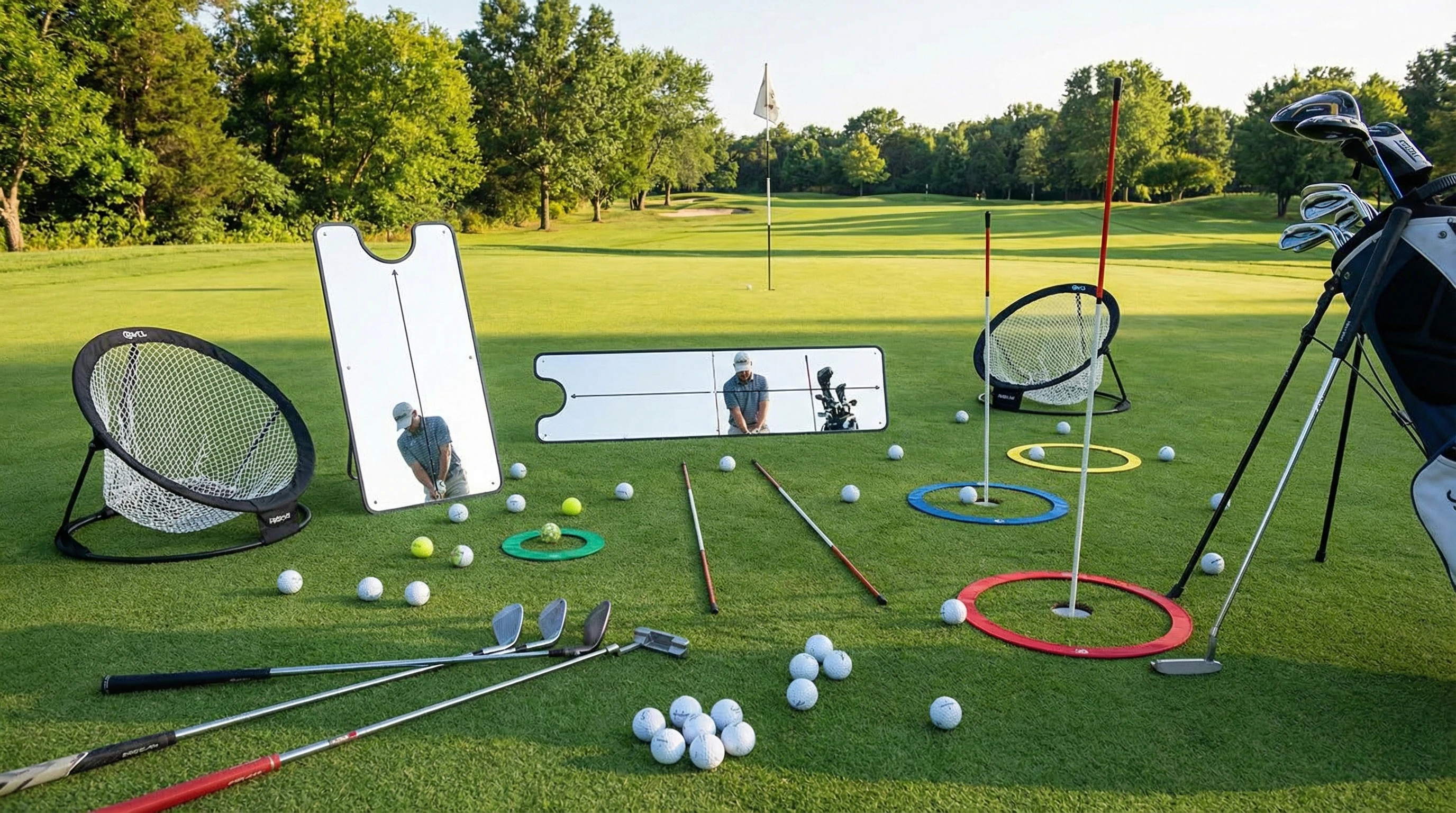
- Chipping Nets: These are super handy for backyard practice or for quick sessions before a round. Nets give you targets to land your chips, making it easier to judge distance and accuracy. Some nets even have multiple tiers or zones for added challenge, so you can track progress as your skills build.
- Impact Boards: Impact (or strike) boards show exactly where your club makes contact with the turf. They make it clear if you’re hitting behind the ball or catching it thin. The feedback is instant, so you can tweak your setup until you’re consistently striking the ball first. If you want to dig into your swing path, some impact boards offer additional lines for visual references.
- Chipping Mats: Good mats mimic the feel of real grass, letting you work on your short game indoors or outdoors. Mats with visual guides help with alignment and ball position, which means you don’t have to guess if you’re practicing good habits. These mats are great for quick warm-ups or rainy day sessions.
- Alignment Rods: Simple as they look, alignment rods help set up for crisp, square impact with chip and pitch shots. You can use them to check stance, aim, and even swing path with minimal fuss. You can also create your own drills using a pair of rods to check both your target line and your feet alignment.
- Popup Targets: Targets you can set down on the green or yard challenge you to land chips at a particular spot. They’re awesome for practicing distance control and focus during any session. Try aiming for different targets in sequence to test your range and creativity.
Best Putting Training Aids for Home or Green
Putting is really important for shaving strokes. Most players can trim plenty off their score just by rolling the ball more consistently. Here are a few aids I like to help you dial in your putting at home or during warm-ups:
- Putting Alignment Mirrors: These flat mirrors show your eye position, putter face angle, and shoulder alignment all at once. I use one at home to warm up and check that bad habits haven’t crept in between rounds. It’s a simple tool, but the immediate visual feedback is really helpful for making sure your eyes are directly over the ball and your putter face is square.
- Putter Gate Drills: Using gates (little arches or tees set up on the green) trains you to start the ball on your intended line. Missing the gate means you’re pushing or pulling your putts, which is good to know before you head out for a round. The challenge of getting putts through narrow gates builds up both confidence and precision over time.
- Putting Mats with Visual Guides: Mats marked with lines or patterns make it easier to focus on a straight stroke or develop a feel for distance. Some even have variable speed surfaces or raised edges to mimic on-course situations. Rolling putts on these mats not only gives you technical feedback but can also keep you sharp during the off-season or bad weather days.
- Tempo Trainers: Getting a smooth, repeatable putting stroke is tough without feedback. Weighted putters or swing aids use added resistance to help you learn proper tempo, which leads to sweet contact and fewer threeputts. If you struggle with rhythm, a tempo trainer can be a real eye-opener and get you in sync quickly.
Starting Out: How to Use Training Aids Effectively
Grabbing the latest gadget won’t solve all your problems overnight, but using training aids in a smart way will definitely help in the long run. Here’s how I like to get the most from them, without making practice feel like a chore:
- Pick One Focus Area: Start by choosing a single aspect of your short game you want to improve, like chipping delivery or putting stroke. That way, you can keep things simple and notice improvements faster.
- Get Consistent Feedback: Use an aid that gives you reliable feedback you can trust. Whether it’s a strike board showing turf contact or a putting mirror showing your face angle, the clarity helps lock in better mechanics each session.
- Mix Real Shots In: Training aids are helpful, but don’t forget to hit some shots without them, too. This helps you bridge the gap between structured practice and what you’ll see on the course. Practice with and without your favorite tool to make sure your skills transfer over seamlessly.
- Set Goals: Create simple, trackable targets for your practice. Trying to get 7 out of 10 chips in the target net or hitting 5 putts in a row through the gate helps keep you focused and motivated. Setting achievable goals each session makes improvement more noticeable over time.
Factors to Consider Before Buying Short Game Training Aids
Not every training aid is going to suit every golfer. Picking the right ones for your personal needs makes a big difference in how effective your practice sessions turn out. Here’s what I like to keep in mind when shopping around for a training aid that fits what I’m looking for:
- Portability: If you want to practice anywhere—at home, the backyard, or while traveling—compact and lightweight aids are especially handy. Some fold up or roll up for easy storage, making it easier to sneak in short sessions on the go.
- Ease of Use: The best training aids are simple to set up and use. Complicated tools that take too long to set up usually end up gathering dust. Find something you can set out and start practicing with in a minute or two.
- Quality and Durability: Training aids made from sturdy materials last a lot longer, especially if you plan to use them outdoors or shove them in your golf bag regularly. Look for reinforced corners and strong mesh in nets, or mats that stay flat on any surface. Durability is key to long-term use.
- Relevant Feedback: Pick tools that help solve your specific short game challenge rather than ones that offer general advice with little clarity. If you tend to misalign putts or hit chips thin, choose aids that address those issues directly. In my experience, precise feedback means faster results.
- Budget: There’s a wide range of price points. Spending more doesn’t always mean you’ll get better results, so consider what you actually need rather than going for bells and whistles. Many of the best performers are also the simplest and most affordable, so don’t let price tags steer you away from effective choices.
Portability
I’ve found that tools like folding chipping nets and rollup putting mats make it much easier to fit quick, quality practice into my day. If something’s easy to carry or stash in your car, you’re way more likely to use it regularly. I love being able to roll up a mat after a session and stash it in a closet without hassle.
Ease of Use
I often gravitate toward training aids that don’t require a ton of explanation. The more time I spend fiddling with setup, the less time I spend actually practicing and improving. The most valuable aids are ones you can grab and use instantly when inspiration strikes.
Quality and Durability
If you’re putting in regular reps, the last thing you want is a flimsy aid that breaks after a couple of uses. Sturdy mats, thick impact boards, and nets with reinforced frames survive hundreds of swings without issue. I’ve had some mats last years of daily chipping drills, so paying a bit more for quality upfront can save money in the long run.
Relevant Feedback
The right training aid solves an actual problem in your short game, whether it’s hitting chips thin, misaligning putts, or struggling with consistent tempo. I always look for aids with instant, clear results—either I did it right or I didn’t, no guessing. This clarity builds confidence as you practice and helps ensure your good habits stick when you’re on the course.
Short Game Aid Applications: RealWorld Benefits
All this practice pays off when you move from drills to real rounds. Here’s where I’ve noticed the biggest improvements from using these training aids:
- Chipping Confidence: Landing more chips on the green and closer to the hole takes some pressure off your putter, letting you approach greens with way less stress. The peace of mind that comes with a reliable chip is truly a game changer.
- Up and Downs: The difference between average and great short games is getting up and down more often. Training aids let you simulate ingame situations, making those tough saves less intimidating even under the gun.
- Putting Consistency: Rolling putts on line, even under pressure, happens much more often after regular practice with alignment tools and tempo trainers. That dependability comes in handy when a big putt is on the line.
- Building Trust in Your Mechanics: When you know you’re practicing good habits, it’s way easier to trust your stroke or chip on the course as well as in the practice area. That trust takes away unnecessary doubt—one less thing to worry about during your round.
Frequently Asked Questions
Here are a few questions I get from players looking to use training aids to boost their short game:
What’s the best way to get started with short game training aids?
Answer: Figure out where your short game struggles most, whether it’s chipping, pitching, or putting. Then pick a simple aid (like a putting mirror or chipping net) to focus on improvement and stick to it for a few sessions. Consistency is more important than variety, especially at the start.
Can training aids actually help improve my game on the course?
Answer: Absolutely. Training aids help make your practice much more effective; that usually translates to more confidence and better execution when you’re actually playing. The progress you see in your practice carries over to the course if you put in the right kind of effort.
Do I need expensive aids to see results?
Answer: Nope. Some of the most helpful tools, like alignment rods or simple mirrors, are pretty affordable and get the job done perfectly well. In fact, simpler tools often provide clearer feedback and are easier to stick with long term.
Finding the Right Aids for Your Practice Routine
Getting better at the short game takes some effort, but mixing in a good training aid or two keeps things fresh, focused, and fun. The more targeted your practice, the faster you’ll see real results, especially around the greens where the game gets exciting. Pick out a training aid that matches your goals and give it a try. You’ll notice the difference in your next round and start gaining confidence when it matters most. Sticking to your practice plan for just a few minutes a day can work wonders over time, so don’t hesitate to check out different tools until you find what truly clicks.